Starting solids can be an exciting milestone – watching your little one explore new flavours and textures as they embark on this food journey. At the same time, however, it can also raise plenty of questions for mums and dads alike, especially when it comes to making sure your baby is getting all the nutrients they need.
One nutrient that deserves special attention during this stage is iron. At around six months of age, babies’ natural iron stores begin to decline, which is why it’s recommended to include iron-rich foodswhen introducing solids.
The good news is that meeting your baby’s iron needs doesn’t have to be complicated. With a few simple strategies and right food choices, you can help support your baby’s growth and developmentduring this exciting time.
Why is iron important for bubs?
Iron is an essential mineral that supports healthy growth and development in babies. It plays several important roles in the body, particularly during the first year of life when growth and brain development are happening rapidly:
- Brain development: Iron supports cognitive development and learning during the early years of life.
- Oxygen transport: Iron helps form haemoglobin, the protein in red blood cells that carry oxygen around the body.
- Energy and growth: Adequate iron helps babies maintain energy levels and supports normal growth.
Babies are born with natural iron stores that are built up from their mother during pregnancy. In the first few months of life, these stores – together with breastmilk or infant formula – are usually sufficient to meet your baby’s iron needs.
However, from around six months of age, these natural iron stores begin to decline. At the same time, your baby’s iron requirements increase significantly due to rapid growth and brain development. As a result, breastmilk or infant formula alone is no longer sufficient to meet these increased iron needs, and iron-rich foods can play an important role of your baby’s diet when starting solids.
In fact, babies aged 6-12 months have some of the highest iron requirements of any stage of life.
How much iron does my baby need?
Iron needs change quickly during the first year of life. The recommended daily intake (RDI) of iron varies depending on age:
Age Group
Birth–6 months
RDI of Iron
0.27 mg/day (from breastmilk/formula)
Age Group
7–12 months
RDI of Iron
11 mg/day
Source: https://www.eatforhealth.gov.au/nutrient-reference-values/nutrients/iron
As shown above, iron requirements increase significantly from 6 to 7 months of age. This reflects the rapid growth and development occurring during this stage of life. While breastmilk or infant formula continues to be an important source of nutrition, solid foods provide the additional iron needed to meet these requirements.
Including iron-rich foods regularly once solids begin can help support your baby’s nutritional needs and healthy development.
Different types of iron in foods
There are two types of iron found in foods:
Haem Iron (Best Sources of Iron):
Haem iron is found exclusively in animal products such as meat, poultry, and fish. This type of iron is more easily absorbed by the body, making it a well-absorbed source of iron when introducing solids.
Non-Haem Iron (Good Sources of Iron):
Non-haem iron is found in plant-based foods like legumes, spinach, tofu, and iron-fortified cereals. While these foods are still great sources of iron, non-haem iron is not absorbed as efficiently as haem iron.
Offering a variety of both haem and non-haem iron foods can help support adequate iron intake for your bub as they begin exploring solid foods.
Iron-rich foods for bubs starting solids
When introducing solids, it is important to offer iron-rich foods regularly to bubs as part of their daily meals to help support their nutritional needs. Here are ten excellent iron-rich foods suitable for bubs beginning solid foods:
1. Pureed red meat
6. Nut butters
2. Poultry
7. Iron fortified cereal
3. Fish (no bones)
8. Sweet potato
4. Dark leafy greens
9. Green peas
5. Tofu
10. Wholegrains
How to prepare iron-rich foods for bubs
When preparing iron-rich foods for bubs, it’s important to consider both safety and nutrient retention. Choose fresh, high-quality ingredients like lean meats, legumes, vegetables, and iron fortified cereals, and prepare them in ways that are appropriate for your baby’s developmental stage.
In comparison to frying or grilling, cooking methods such as boiling, steaming, or baking are ideal for preparing baby foods as they help retain nutrients (including iron) while keeping foods soft and easy to eat. For meats, ensure they are cooked thoroughly and then finely minced, shredded, or pureed to a texture that suits your bub’s ability to chew and swallow safely.
Some families may also choose to introduce iron-rich foods through a baby-led weaning approach, where bubs are offered appropriately sized finger foods (e.g., soft-cooked beans or meat) to self-feed and explore different textures and options at their own pace.
For plant-based iron sources such as beans or lentils, soaking and cooking them well can improve their texture and digestibility. Pairing these foods with vitamin C-rich foods such as tomatoes, berries, citrus fruits, or capsicum may help support iron absorption
Importantly, introducing new iron-rich foods gradually and in small amounts can help parents monitor for any adverse reactions or allergies. Offering a variety of iron-rich options over time can also encourage bubs to explore different tastes and textures as they become more familiar with solid foods.
Simple & practical meal/snack ideas
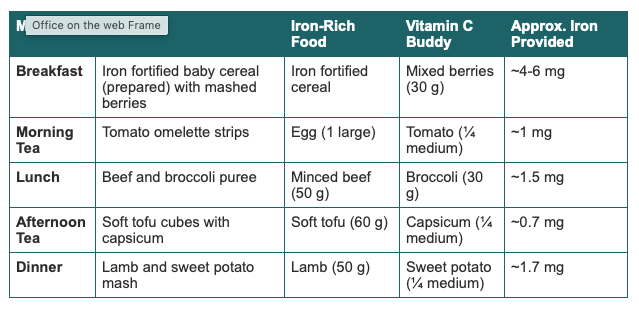
Here are some simple meal and snack examples to show you how iron-rich foods can be included throughout the day.
Fun fact – pairing these with vitamin C-rich foods like citrus fruits, berries, or capsicum can help your baby absorb iron more effectively. Vitamin C acts like an iron helper, converting iron into a form that is easier for the body to absorb.